
Monday, April 25, 2016
Thursday, March 17, 2016
Newly updated book, Survival Q & A is now available.

These are just a few of the many questions survival instructor Tony Nester answers in his informative, and at times, humorous book. Culled from the past twenty-five years of teaching, writing, and responding to readers of his popular Practical Survival book series, Tony delves into the Q & A of survival as it relates to forest, desert, jungle, and urban settings along with the often misunderstood realm of living off the land.
About the Author: Tony Nester is the author of numerous books and DVDs on survival. His school Ancient Pathways is the primary provider of survival training for the Military Special Operations community and he has served as a consultant for the NTSB, FAA, Travel Channel, NY Times, Backpacker Magazine, and the film Into the Wild. For years he wrote a popular monthly column for Outside Magazine and his freelance writing is frequently featured in numerous print publications.
This is a digital-format book and it is available on Kindle, Nook, Kobo, Apple iBooks, Google, and more. Amazon orders can be purchased by clicking here or on the photo above. Cost is 0.99 for a limited time.

Wednesday, February 3, 2016
DIY Dog House Plans
 |
| Most Rez dogs spend their lives under open skies and have to contend with extreme temps and lack of food. |
 After researching different low-cost doghouses and talking to friends from Canada who are mushers, it became clear that the Alaskan-style doghouse design would be a feasible structure to make and distribute to Rez dog households around my region. The one above cost me $30.
 The cheap, plastic (and pricey) doghouses sold at pet stores do very little to actually trap in the body heat and shut out the elements. Having spent years testing out and sleeping in handmade shelters, I can tell you that it's loft (dead air space) that enables you to stay warm, hence the reason down jackets and sleeping bags work so well. Make a natural shelter with a small entrance to reduce heat loss and jam it with enough pine needles/leaves/debris and you will have the means of coping with brutal temps.

The tools needed are: Skil saw, jigsaw, tape measure, cordless drill, 2" deck screws. For added strength, I also put a bead of Liquid Nails glue on all of the joints and borders. I went with the Extreme Temperature Liquid Nails as I've been building these when the daytime temps are only around 30 degrees and needed a glue that would set up better.


The roof can be made removable for ease of cleaning the inside or you can just place a few screws to secure it until cleaning time arrives (recommended in windy areas like mine). This is the basic, uninsulated design that most sled dog mushers use. Fill it with a generous amount of straw and it will create quite a windproof nest.

If you want to add insulation, go with the quality 2" foam as it cuts easily and is more durable than the pink insulation. This size perfectly fits the 2" deep walls created by the 2x4 supports. This particular shelter has masonite paneling add over the insulation to prevent the latter from getting chewed on or flaking apart through use.

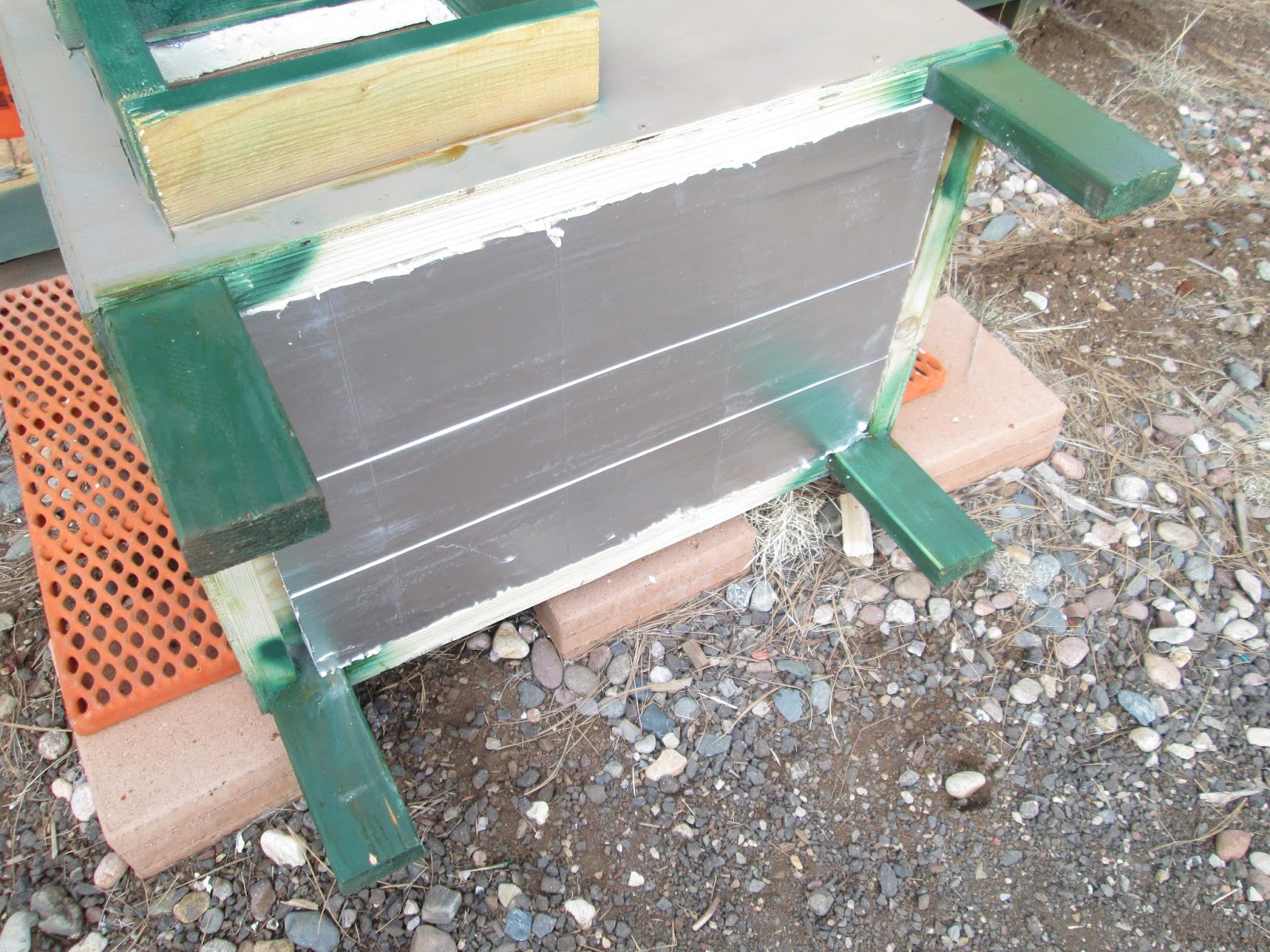


Building a vestibule off the front will extend the living space for inclement weather. For this set up below, I merely screwed on some side panels (no glue, so I can remove this in the summer), put in cross-members and made a removable front panel.
 The stacked concrete on the inside is for placement of a small ceramic heater (the kind with the auto-shut off in case it gets tipped). The front facade will also be painted black to absorb more heat in the winter. There is a Lexan window on top for passive solar as well. The dog house will have a heating pad on the inside as well. The patio blocks keep the structure off the ground and the bottom wood edges were all treated with Thompson's Water Seal prior to placement.


Subscribe to:
Posts (Atom)
