Three Hallmark Outdoor Skills
There are a plethora of wilderness skills and topics to learn depending on your interests, whether mountaineering, canoeing, fly-fishing, or hunting. The bushcraft and survival realm are no different. Like studying a martial art, each field has its own set of basics and I’ve listed what I consider to be the top 3 skills for wilderness living, using some of the more traditional skills. These are focused on living in the backcountry in comfort, not in eking out a miserable night during an unexpected emergency, though possessing these skills will surely help you get through such an ordeal.
1. Knifecraft: whittling and carving your own tools from wood you’ve gathered is nearly a lost art. Making spoons, bowls, carving deadfalls, cutting notches, fashioning digging sticks and bows are just a few of the ways to reconnect with your surroundings. Find a quality knife that fits well you (i.e, not the tacti-cool blade touted in the latest issue of Survival Beast & Brawn Magazine). Next, learn how to sharpen it and then carve constantly during freetime, around camp, or in your backyard. As many of you know, I’m a fan of the Swedish Puukkos (Mora knives) but there are many fine bushcraft-specific blades out there. Kellam knives, Bark River, and Frost all fine companies to consider. A crook knife and Swedish spoon gouge is ideal if you plan to do some finer woodworking around the evening fire.
2. Firemaking: can you light a fire under cold, wet conditions with just one match or with the first pass of your spark rod? This isn’t about luck or reality show-gimmicks but about following the logical steps for firelighting that will ensure your success. Learn the tipi firelay or the survival firelay and then become adept at making fire in the cold, rain, snow, at night via headlamp, with one hand, and using various tinders. Firemaking is a skill of repetition so buy a box of strike-anywhere matches and practice until you can finally get it done with only one match in under ninety seconds.
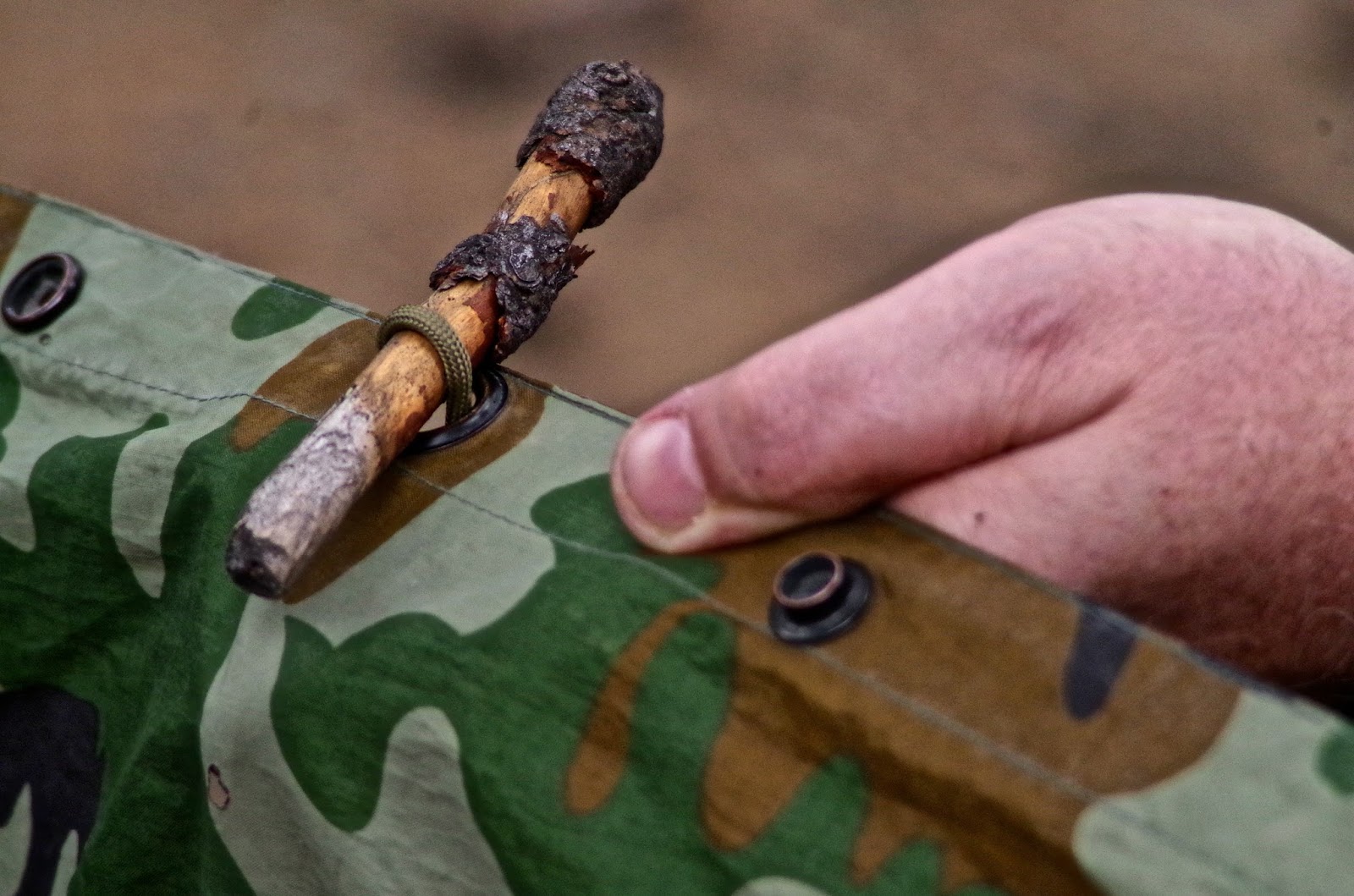
3. Sheltermaking: this covers a lot of ground from camp selection to tarp rigging, building lean-tos, Quinzees, and wickiups, to making a fire and shelter combo work smoothly. The area I’d start with is learning to set up a tarp using two different hitches such as the timber hitch and half-hitch. Then practice your skills under a variety of environmental conditions and with different configurations (diamond, A-frame, etc...). I rarely use a tent in the backcountry and prefer either a nylon 8x8 Campmor tarp or, if weight isn’t an issue, a 12x12 canvas tarp from Panther Primitives.
Ancient Pathways, LLC
Welcome
to Ancient Pathways, LLC
Outdoor Programs
in Desert Survival and Bushcraft
Showing posts with label Tony Nester. Show all posts
Monday, June 6, 2016
Thursday, March 17, 2016
Newly updated book, Survival Q & A is now available.

These are just a few of the many questions survival instructor Tony Nester answers in his informative, and at times, humorous book. Culled from the past twenty-five years of teaching, writing, and responding to readers of his popular Practical Survival book series, Tony delves into the Q & A of survival as it relates to forest, desert, jungle, and urban settings along with the often misunderstood realm of living off the land.
About the Author: Tony Nester is the author of numerous books and DVDs on survival. His school Ancient Pathways is the primary provider of survival training for the Military Special Operations community and he has served as a consultant for the NTSB, FAA, Travel Channel, NY Times, Backpacker Magazine, and the film Into the Wild. For years he wrote a popular monthly column for Outside Magazine and his freelance writing is frequently featured in numerous print publications.
This is a digital-format book and it is available on Kindle, Nook, Kobo, Apple iBooks, Google, and more. Amazon orders can be purchased by clicking here or on the photo above. Cost is 0.99 for a limited time.
Sunday, January 24, 2016
Cold-Weather Firemaking Challenge or How to Prevent Hypothermia
Cold-Weather Survival Firemaking Challenge
This is something I do with my students in my winter survival classes and quite frequently in my backyard when the snow is coming down. It is -1 degrees today in Flagstaff so it seemed like a good time to practice. It's one thing to start a survival fire under controlled conditions during a camping trip or when your body is in good shape but quite another when you are dealing with hypothermia and the reduced motor-skills that accompany it.
1. Place your hands in the snow for 2 minutes then 2) grab your different firemaking tools and try to ignite your tinder. Simple as that. 99% of the time the spark rod is my tool of choice as it requires gross motor skills unlike a lighter or matches and works when wet. Good luck trying to get a lighter going when you're all thumbs. Tinder is in the top pics. For my friends in Phoenix, get a bowl of ice cubes!
Since the majority of hypothermia cases happen in 50 degree F weather around the world and since most lost dayhikers are injured and hypothermic, it pays to build your skills and accompanying trail gear around the fact that you may have reduced motor-skills.
Monday, June 15, 2015
5.11 Rush 24 Pack: 1 Year Later
As a freelance writer for numerous magazines, I receive a handful of items for review. Last spring a batch of 5.11 products arrived including their RUSH24 Backpack. After using this as my primary pack for countless survival courses, personal treks, and air travel I can say that this is a beast and holds up like few other pieces of gear I own.
With my height of 6’, I find the neck yoke and shoulder strap width comfy. There's a wrap-around web platform which is MOLLE compatible and allows ample
space to attach my survival kit and a small medical pouch on the front panel. The
size is a little too big for short dayhikes but ideal for 2-3 day treks for my needs. The
company states that it is a 2000 cubic inch pack (33 liters) but that is only
for the main compartment. Add in the multiple side and front pockets and you
greatly increase the carrying capacity.
I made the mistake of leaving my pack outside my shelter one night in the desert and a packrat chewed through the shoulder strap. I've jerry-rigged the webbing for the past month but will have to look into replacing this soon.
Friday, October 24, 2014
Natural and Improvised Survival Shelter Considerations
October Survival
Tips
In our
fieldcourses, we often discuss the importance of the Five "W's" when building a
shelter. This applies not only to survival but when car-camping or backpacking.
When selecting a campsite or location for a shelter take into account the
following factors:
1. Weather. Don't rig up your tarp or lean-to on the edge of a forest and field or other major transition area. The wind will be more pronounced and lightning safety will be an issue during thunderstorms. Setting back your campsite even twenty yards into the forest will help minimize gusty winds. It may seem like common sense but you also want to avoid sleeping at the bottom of a canyon or arroyo not only due to flash flood concerns (yet backpackers still do this ever year in Arizona!) but due to the temperature gradient. These low regions will be much colder at night and are often animal highways.
2. Wood. You are going to need limbs and
debris to build a natural shelter and possibly for firewood so make camp in a
region with ample resources.
3. Water. This is a survival priority for staying hydrated so set up camp a short walk away from a creek, lake, or waterhole. These areas will also provide opportunities for foraging, fishing, and catching crayfish which all come into play with a longer stay in the wilds or when attempting to live off the land.
4. Widowmakers. Pitch your tent out of reach of those dead standing trees! Enough said.
5. Wigglies. Mice, rats, centipedes, scorpions, fire-ants and other critters like dark, damp places and are often found in rockpiles, thick brush, and boulder fields. In the desert and in the Grand Canyon, the scorpions love hanging out under cowpies and the mule droppings by the corral! I always avoid downed, rotting logs and clusters of rocks as I've had too many encounters with creepy-crawlies in such places. If you are camping with your kids, tell them to be aware of such spots when gathering firewood and to always wear gloves as a precaution for venomous insects.
Thanks for taking a few minutes out of your day to catch up with us.
Enjoy the Wilds!
Tony Nester
Sunday, February 19, 2012
Long-Term Wilderness Living and Grid-Down Tips
Lessons learned from life on the trail long-term
Having spent extended periods of time ranging from 21-90 days living off the land in wild regions or under primitive conditions (no sleeping bag, tent, stove, firearms, food drops, etc…), I’ve jotted down a few things that were discovered along the way.
Life in the wilds is about sweat and calories. You only need a handful of bush essentials to transition from surviving to living and those few tools can be critical. The following list is not about my 72-hour survival kit or EDC but gear that would augment that and can be useful for long-term life in the wilds where resupply is limited, non-existent or in an extended grid-down situation.
1. A sleeping bag is a great asset for reducing calorie expenditure and allowing the body to recuperate during those precious 8 hours of warmth at night. Being on the move in the constant search for food and then having to build a shelter wears on you physically after a while and eats up valuable time that can be spent on making more traps, hunting, gear repair and so on. I will take a small, down sleeping bag any day as part of my survival kit. Wiggy’s brand is hard to beat or a down bag by Mountain Hardware for the ultimate in compact sleeping gear.
2. A poncho and 550 cord for making shelters, windbreaks, sun-protection, rain-collection, carrying bedding material (pine needles, leaves), and improvised pack. This will provide you with so many shelter variations. I prefer to string mine up in a diamond shelter or if wind is an issue, then as an A-frame or pup-tent style. The poncho and 550 are companion items.
3. Quality footwear is essential. You can abuse your feet with poor footwear on a short dayhike near home but long-term, don’t skimp on quality boots. Going barefoot may look nifty on the manufactured reality of a TV show but the last thing you want to have happen in real-life is to have your feet shredded and mobility reduced to zero while they recover. If you lose your ability to move, you lose your ability to procure food and also hamper the efforts of the rest of the group while they wait on you to recover. Find footwear that works for you and make sure it’s well broken in. Lastly, as any combat soldier will tell you, the inserts are as important as the boot. Toss out the inserts the boots came with and spend an extra $20 to get some decent shock-absorbing inserts that match your arch and foot contours. SuperFeet is one brand to consider.
4. Leather Gloves- same as protecting the feet, you want to have a few pairs of work gloves to reduce the punishment of your primary tools: your hands. For years I went without ever using gloves while living and working outside. Your hands will develop a tough exterior after weeks in the elements but it only takes one mishap and then your ability to work is comprised. I once suffered a nasty gash deep into the muscle of my palm while breaking up juniper branches for firewood and had to do everything one-handed for the next four days. A lightweight pair of garden-type or leather gloves is a must-have item in my kit now.
5. Spark-rod firestarter: 500 fires in one rod, works when wet, works when you are down to gross motor skills from hypothermia, works one-handed, just plain WORKS- Enough said!
6. Small tin of Bag-Balm salve. Long-term you feel the effects of the wind and constant campfire heat on your dried out hands and cracked lips, especially in the arid Southwest. Sure I don’t need this to survive, but it sure helps with my PMA and helps the hands recuperate from constant punishment and cracks. Heck, my ranching friends use it every day so don’t worry about losing your rugged, calloused hands- it’s for maintenance of such hands.
7. A small cooking pot is a good friend. Sure you can coal-burn bowls, use gourd containers and cook on a spit but these methods take time to become proficient at and require maintenance. I have used 64 ounce coffee cans for all of my meals on several 21-day survival trips and a stew is a good way to go for conserving nutrients and providing a constant broth to add to the next night’s dinner. 32 ounce Pineapple and juice containers are a good size for one person and will allow you to nest a water bottle inside. A handle of (22 gauge) snare wire or a metal coat-hanger affixed to the can will give you a handle and allow the pot to be suspended over the fire. Short of that I have my metal canteen cup that is always in my kit.
8. Needle and Kevlar thread. I’ve temporarily mended torn clothes and boots before with duct tape which is good for a day but, long-term, it helps to have a small sewing needle and a few yards of Kevlar thread. The last thing you want is grit seeping in through a split in your leather boots or gloves comprising your skin over time. The Inuit in the Arctic thought a simple sewing kit important enough that every man, woman and child carried a bone needle and shredded caribou tendon-thread for repairing damaged footwear and parkas. Necessary in an environment where flesh can freeze in seconds when it’s bitter cold. I carry two heavy-duty sewing needles in my waterproof match case for ease of extracting when needed. The inner strands of 550 cord can work but the Kevlar is fine material, mighty tough and affordable.
9. Tabasco, brown sugar, and bouillon cubes are must-have ingredients to spiff up meals of a repetitive nature (such as rabbit or squirrel for the 9th night in a row). Out of these three, I’ll grab the Tabasco first if I had to choose. We ran out of this once towards the end of a month-long trip and all we talked about at dinner for the last three days was that red elixir and the magic it imparted to our meals. Both Tabasco and bouillon will also impart much-needed sodium to your diet.
10. If weight and continual movement are not an issue such as when holing up in a permanent basecamp for a few weeks, the following tools are most helpful:
-a bucksaw or even a folding saw
-Japanese whetstone for honing my Mora knife and other camp blades
-Gransfors Bruks Ax
-collapsible woodstove: sure is nice to have one in an earth shelter, shack or canvas tent and is 100x more fuel efficient than having an open campfire. You will sleep better, feel better, and burn fewer calories gathering firewood. Again, this is for a fixed basecamp. I have a mini-galvanized stove that is 20” long by 12” wide and 10” high and have used this in small hogans as the primary heat source. It has been with me on extended trips and even winter treks via a toboggan. I’ve slept out on many a cold night for weeks on end with a lean-to/campfire combo and other primitive shelters and they eat wood constantly- on the average of ½ cord of wood some times and that’s not even below zero! A small woodstove is a critical piece of gear for a long-term scenario in a permanent basecamp.
Friday, December 17, 2010
Skeletons on the Zahara- book review
Looking for some good survival literature, check out the book by Dean King- "Skeletons on the Zahara".
When I was guiding professionally throughout the Southwest for the university, I had a couple from New England who spoke highly of this book. With each bend in the canyon trails we were on, they recounted the tales of hardship and resourcefulness from the book. After that, I forgot about the title only to graciously receive a copy a few months later from those two kind folks.
Once begun, you are not likely to put the book down. The gist: twelve American sailors who were shipwrecked off the coast of Africa in 1815 (yeah, before SAT phones, Leatherman, and spark-rods) and have to survive not only the elements but the hostile nomads roaming the region. They figured they were better off turning themselves over to the locals and being made into slaves than to perish in the desert and that is when the tale of survival really begins. The crew then endures two months of hellish conditions while journeying across some of the most inhospitable landscape on the planet while contending with barbarism and starvation.
There is a lot of insight into "primitive skills" along with providing a look into the harshness of life in the unforgiving desert for those not familiar with this trying land.
Originally taken from the sea Captain James Riley whose journal "Sufferings in Africa" were unearthed by author King, and turned into this riveting account of survival, endurance, and brotherhood. Riley's journal was published shortly after the War of 1812 and gained considerable notoriety, attracting such followers as Thoreau, James Fenimore Cooper, and Abraham Lincoln, the latter of whom said it was one of the most influential books of his youth.
This tale reminds me of when I was pouring over the story of the Bielski brothers (the movie "Defiance" was based them) and Shackelton's story years ago and thinking- "What is there to complain about in life!!"
If you're looking for some literature on the triumph of the human spirit and survival, and from a time when people's ingenuity and skills ruled, then check it out. Just have a cool glass of water handy for the chapter called "Thirst."
Enjoy the wilds!
Tony Nester
Ancient Pathways, LLC
http://www.apathways.com
Tuesday, December 1, 2009
How not to "die of exposure"
Hypothermia and Immersion Hypothermia are both serious killers of people in the outdoors each year. Most cases of hypothermia happen in 50 degree F weather and are preventable- dress properly (no cotton!), stay hydrated, and do something about it when you get wet or begin losing dexterity such as build a fire & shelter, get back to the vehicle, or into the sleeping bag. A good hypothermia recipe is to have a cup of hot chocolate with a tablespoon of butter and I always carry this solution in a thermos when on the winter trail.
Keep in mind that the statistics bear out that the classic "survivor" lost in the wilds each year is injured and hypothermic.
Immersion Hypothermia is a real killer and you only have a limited amount of time on your hands. The best info comes from this U of Toronto Professor who has studied it the most and is on YouTube. Pass this vid around to those who spend time playing ice hockey, ice-fishing, or traveling the wilds in winter. It can be a lifesaver to know- http://www.youtube.com/watch?v=ysnKtuUTt8k
Another test I do with my students on winter survival courses is to have them place their hands (minus gloves) in the snow for a count of 60 seconds. After this, they must get a fire going using their matches, lighter, or spark rod. With a loss of dexterity, the spark-rod wins out as it involves gross-motor movement compared to the lighter and matches. Try this test in the backyard next snowfall and see how your firemaking gear holds up when the hands are numb.
Cottonballs smeared with vaseline and used for tinder is the other half of the picture in successfully starting a fire when the forest is buried in snow.
Tony Nester
Ancient Pathways, LLC
http://www.apathways.com
Subscribe to:
Posts (Atom)
About Ancient Pathways
Tony Nester is the author of numerous books and DVDs on survival. His school Ancient Pathways is the primary provider of survival training for the Military Special Operations community and he has served as a consultant for the NTSB, Travel Channel, Backpacker Magazine, and the film Into the Wild. When not on the trail, he lives in a passive-solar, strawbale home in northern Arizona. For information on Tony’s books, gear, or bushcraft courses, visit www.apathways.com.
|
Copyright©2008-2015. All Rights Reserved. The content of this survival tips blog is owned exclusively by Ancient Pathways, LLC. [Flagstaff, Arizona]. |
|
Survival Tips Blog Layout by Reliable Web Designs |