Looking for some good survival literature, check out the book by Dean King- "Skeletons on the Zahara".
When I was guiding professionally throughout the Southwest for the university, I had a couple from New England who spoke highly of this book. With each bend in the canyon trails we were on, they recounted the tales of hardship and resourcefulness from the book. After that, I forgot about the title only to graciously receive a copy a few months later from those two kind folks.
Once begun, you are not likely to put the book down. The gist: twelve American sailors who were shipwrecked off the coast of Africa in 1815 (yeah, before SAT phones, Leatherman, and spark-rods) and have to survive not only the elements but the hostile nomads roaming the region. They figured they were better off turning themselves over to the locals and being made into slaves than to perish in the desert and that is when the tale of survival really begins. The crew then endures two months of hellish conditions while journeying across some of the most inhospitable landscape on the planet while contending with barbarism and starvation.
There is a lot of insight into "primitive skills" along with providing a look into the harshness of life in the unforgiving desert for those not familiar with this trying land.
Originally taken from the sea Captain James Riley whose journal "Sufferings in Africa" were unearthed by author King, and turned into this riveting account of survival, endurance, and brotherhood. Riley's journal was published shortly after the War of 1812 and gained considerable notoriety, attracting such followers as Thoreau, James Fenimore Cooper, and Abraham Lincoln, the latter of whom said it was one of the most influential books of his youth.
This tale reminds me of when I was pouring over the story of the Bielski brothers (the movie "Defiance" was based them) and Shackelton's story years ago and thinking- "What is there to complain about in life!!"
If you're looking for some literature on the triumph of the human spirit and survival, and from a time when people's ingenuity and skills ruled, then check it out. Just have a cool glass of water handy for the chapter called "Thirst."
Enjoy the wilds!
Tony Nester
Ancient Pathways, LLC
http://www.apathways.com

Showing posts with label Ancient Pathways Arizona survival training Tony Nester. Show all posts
Showing posts with label Ancient Pathways Arizona survival training Tony Nester. Show all posts
Friday, December 17, 2010
Thursday, November 25, 2010
What is the best way to melt snow for water?
This article is taken from Tony Nester's popular monthly column with Outside Magazine. To read more from his "Survival Guru" column, visit http://www.outsideonline.com
On overnight winter treks, I always bring a pillowcase that I turn into a snowmelting device later at camp. Simply pack the pillowcase with snow and hang it off a branch near (not over) the campfire. A pot below can catch the dripping water. It normally takes about 30 minutes to fill a quart of water this way so we keep the device going during our evening fire. One woodsman from Michigan I know, prefers using a mosquito headnet instead of a pillowcase as his snowmelting device. Just be cautious not to get the headnet, which is made of nylon, too close to the fire or it will melt.
Other methods that I have used include the “snow marshmallow” where you take a large, soccer-ball sized lump of snow (like the hardpacked kind you make for a snowman), and place it on a stick anchored near the fire. You can also use a few (hopefully clean) socks or a bandanna that are stuffed with snow and hung by the fire.
I have heard of survivors using black trash bags and reflective emergency blankets with snow on top to passively melt snow in the sun.
On short dayhikes, I bring along a Nalgene water bottle that is covered from top to bottom with black duct tape to provide me with a passive solar snow-melting device. I have another (lightweight “whiskey” flask) bottle that has a 3’ loop of webbing taped on so I can wear it around my neck and inside my parka where my bodyheat converts the snow into water while I hike.
If you are going to melt snow in your cooking pot over the fire or campstove, be sure to add a little water first unless you like the taste of burnt snow.
For further info on Tony's survival courses, books, or DVDs, check out http://www.apathways.com


Sunday, April 11, 2010
Rattlesnake Bites
The following article is an excerpt from Tony's monthly column in Outside Magazine, titled the Survival Guru (their wording). To view the last 14 months of articles, visit http://www.outsideonline.com
Beware Rattlers!
Beware Rattlers!
On nearly every trek and walkabout I've done in the desert Southwest, I have encountered a rattlesnake, especially under and around rockpiles as this is where rodents also dwell.
While writing a book on desert survival, I spoke with the fine staff at the University of Arizona Toxicology Department, who said your best treatment for rattlesnake bite is to grab your car keys and head to the ER. Using suction devices, snakebite kits, and Hollywood methods of cutting and sucking will only waste precious treatment time that should be spent at the hospital.
In the field, stay calm, wash the wound, stay hydrated, and make a call for help if possible, but otherwise, if you're solo, plan on walking slowly back to your vehicle and driving out. Don't use a tourniquet or ice, just plan on getting to a hospital--remember, if you were actually envenomated, time is tissue.
Around 25 percent of rattlesnake bites are dry (without the snake envenomating you), and the good news is that rattlesnake bites are rarely fatal. According to the Arizona Game and Fish Department, there were 1,912 people bitten in Arizona from 1989 to 1998, with only four fatalities. One thing to note is that kids are at higher risk from any venomous bites because they have a smaller body mass to absorb the toxin. Interestingly, the pattern associated with rattlesnake-bite victims is that they tend to be male, 18-35 years of age, and intoxicated. In other words, the snake was provoked.
Bottom line: Carry a walking stick and remember the golden rule of wilderness travel--don't put your hands and feet where you can't see!
Enjoy the Wilds,
Tony Nester
Ancient Pathways Survival School, LLC
http://www.apathways.com
Thursday, March 18, 2010
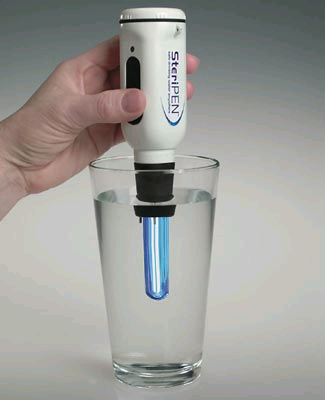
SteriPen Water Purification Review
I have had a Steripen water purification device for several years now and have tested it in various locations during this time. Recently took it on the Costa Rica course last month and put it through a few more trials and it held up well.
I have to say this is an excellent product if you understand its limitations. Simply turn it on, stick the probe end into your water bottle/glass and then leave in, while stirring, for 48 seconds for 16 oz or 90 seconds for 1 quart.

Pros
-Lightweight
-Kills both viruses and bacteria
-Uses UV rays to sterilize water so no unpleasant taste as with Iodine
-Purifies 200 half-liters on one set of batteries (needs 4 AA Lithiums)
-Takes mere seconds to purify water
-Excellent for business travelers, urban survival kits, and in a stationary wilderness basecamp
Cons
-Uses batteries though you can get a solar charger
-Delicate so I wouldnt use if backpacking long-distance or would bring Iodine as backup in case system failed.
-Won't work well below freezing as batteries are affected so must be kept warm prior to use in the field.
-Only works with clear water, so no murky, silty, or muddy water. Even prefiltering our desert stream water in AZ doesnt get completely settled and therefore UV rays won't penetrate to the depth of water bottle. In crystal clear mountain streams, it is fine.
Overall, I recommend getting one for your home kit for an emergency, or for international travel to treat hotel/restaurant water. For wilderness travel, I would carry a MSR Filter or Iodine or skip the Steripen if lengthy, travel over rough terrain is involved.
Retails for $80-$90.
Thanks for reading! If you're interested in info on our survival fieldcourses or our books, visit http://www.apathways.com
Take care and enjoy the wilds!
Tony Nester
I have to say this is an excellent product if you understand its limitations. Simply turn it on, stick the probe end into your water bottle/glass and then leave in, while stirring, for 48 seconds for 16 oz or 90 seconds for 1 quart.
Pros
-Lightweight
-Kills both viruses and bacteria
-Uses UV rays to sterilize water so no unpleasant taste as with Iodine
-Purifies 200 half-liters on one set of batteries (needs 4 AA Lithiums)
-Takes mere seconds to purify water
-Excellent for business travelers, urban survival kits, and in a stationary wilderness basecamp
Cons
-Uses batteries though you can get a solar charger
-Delicate so I wouldnt use if backpacking long-distance or would bring Iodine as backup in case system failed.
-Won't work well below freezing as batteries are affected so must be kept warm prior to use in the field.
-Only works with clear water, so no murky, silty, or muddy water. Even prefiltering our desert stream water in AZ doesnt get completely settled and therefore UV rays won't penetrate to the depth of water bottle. In crystal clear mountain streams, it is fine.
Overall, I recommend getting one for your home kit for an emergency, or for international travel to treat hotel/restaurant water. For wilderness travel, I would carry a MSR Filter or Iodine or skip the Steripen if lengthy, travel over rough terrain is involved.
Retails for $80-$90.
Thanks for reading! If you're interested in info on our survival fieldcourses or our books, visit http://www.apathways.com
Take care and enjoy the wilds!
Tony Nester
Subscribe to:
Posts (Atom)
